Русский
 Türkçe
 Tiếng Việt
As global demand for power cables, data cables, EV charging cables, and renewable energy infrastructure continues to rise in 2026, cable extrusion lines are operating at higher speeds and tighter tolerances than ever before. While modern extruders are more intelligent and automated, extrusion defects remain one of the biggest sources of scrap, downtime, and hidden production cost.
This in-depth FAQ-style guide answers 25 of the most common cable extruder problems, with practical explanations rooted in real factory scenarios. Whether you are running PVC, PE, XLPE, LSZH, or silicone cable lines, this article is designed to help engineers, production managers, and maintenance teams stabilize quality and improve yield.
Part I: Surface & Internal Defects
1. Why do bubbles appear in cable insulation?
Bubbles are typically caused by moisture in raw materials, especially hygroscopic compounds like nylon or LSZH. Trapped air, degraded material, or excessive barrel temperature can also lead to gas formation.
Key solutions:
Pre-dry compounds properly
Reduce barrel temperature in early zones
Improve vacuum venting efficiency
2. What causes pinholes on the insulation surface?
Pinholes often result from micro moisture, poor die polishing, or contamination in the compound. Even small metal particles can create pinhole defects at high extrusion pressure.
3. Why does the cable surface look rough or sharkskin-like?
This is commonly referred to as melt fracture, caused by excessive shear stress at the die exit. High line speed and low melt temperature are typical contributors.
4. Why does insulation crack after cooling?
Post-extrusion cracking usually relates to thermal stress, incorrect cooling gradients, or incompatible compound formulations.
5. Why does the insulation shrink excessively?
Excessive shrinkage is linked to overheating, poor compound quality, or incorrect draw-down ratio.
Part II: Extruder Mechanical Issues
6. Why does the extruder screw slip?
Screw slippage occurs when feed friction is insufficient, often due to low material bulk density or worn screw flights.
7. What causes unstable extrusion output?
Output fluctuation is often caused by inconsistent feeding, temperature drift, or screw wear.
8. Why does material backflow inside the barrel?
Backflow happens when compression ratio is mismatched with the compound rheology.
9. Why does the extruder overload at high speed?
Overload usually indicates incorrect temperature profile, contaminated material, or excessive head pressure.
10. Why does the extruder vibrate abnormally?
Mechanical vibration may be caused by bearing wear, screw imbalance, or gearbox misalignment.
Part III: Temperature & Process Control Problems
11. Why does barrel temperature fluctuate?
Temperature instability can stem from faulty thermocouples, PID tuning issues, or heater degradation.
12. Why is melt temperature higher than barrel settings?
Shear heating caused by high screw speed and material viscosity often leads to hidden melt overheating.
13. Why does insulation thickness vary?
Thickness variation is usually a combination of line speed instability, die centering error, and haul-off fluctuation.
14. Why is concentricity difficult to maintain?
Poor concentricity often results from misaligned crosshead, uneven material flow, or unstable conductor tension.
15. Why does insulation burn or discolor?
Discoloration indicates material degradation, typically caused by excessive residence time or overheating.
Part IV: Die & Tooling Related Issues
16. Why does material leak at the die head?
Leakage is usually due to seal wear, improper torque, or thermal expansion mismatch.
17. Why does the die clog frequently?
Die clogging often results from compound contamination or insufficient filtration.
18. Why does insulation stick to the die?
Adhesion problems are commonly caused by low die temperature or incompatible release properties.
19. Why does surface gloss vary?
Gloss variation reflects temperature inconsistency and shear variation across the die.
20. Why does tooling wear accelerate?
Accelerated wear may be due to abrasive fillers, improper steel hardness, or misalignment.
Part V: Line Integration & Quality Stability
21. Why does scrap increase during startup?
Startup scrap is usually caused by thermal imbalance and unstable melt flow.
22. Why is output inconsistent between shifts?
Human operation differences and parameter drift are common culprits.
23. Why does the cable fail spark testing?
Spark test failures indicate thin insulation spots or pinholes.
24. Why does insulation deform during take-up?
This occurs when cooling is insufficient or take-up tension is excessive.
25. How can extrusion defects be reduced long-term?
Long-term stability requires a holistic approach:
Standardized process windows
Preventive maintenance
Data-driven monitoring
High-quality extrusion equipment
Final Thoughts: Turning Extrusion Problems into Competitive Advantage
In cable manufacturing, extrusion quality defines product reliability. Each defect not only increases scrap but also weakens customer trust. By understanding the root causes behind common extruder problems, manufacturers can move from reactive troubleshooting to predictive process control.
At DX Cable Technology, we continuously help global cable manufacturers optimize extrusion lines through precision equipment design, process consulting, and automation upgrades. If your production line struggles with recurring extrusion issues, systematic improvement—not temporary fixes—is the real solution.
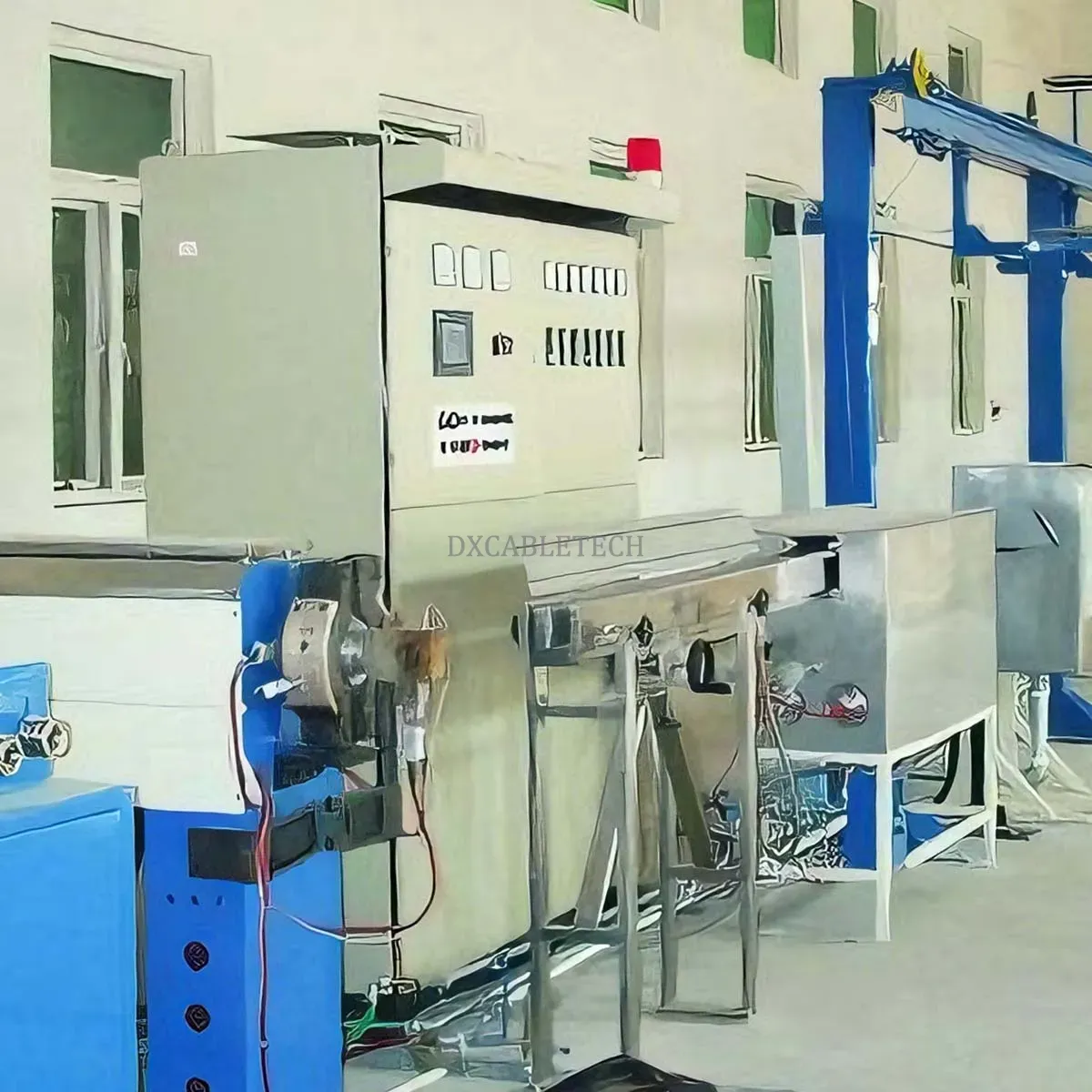
Explore the complete cable manufacturing system:
→ Cable Manufacturing Process & Equipment Guide