Русский
 Türkçe
 Tiếng Việt

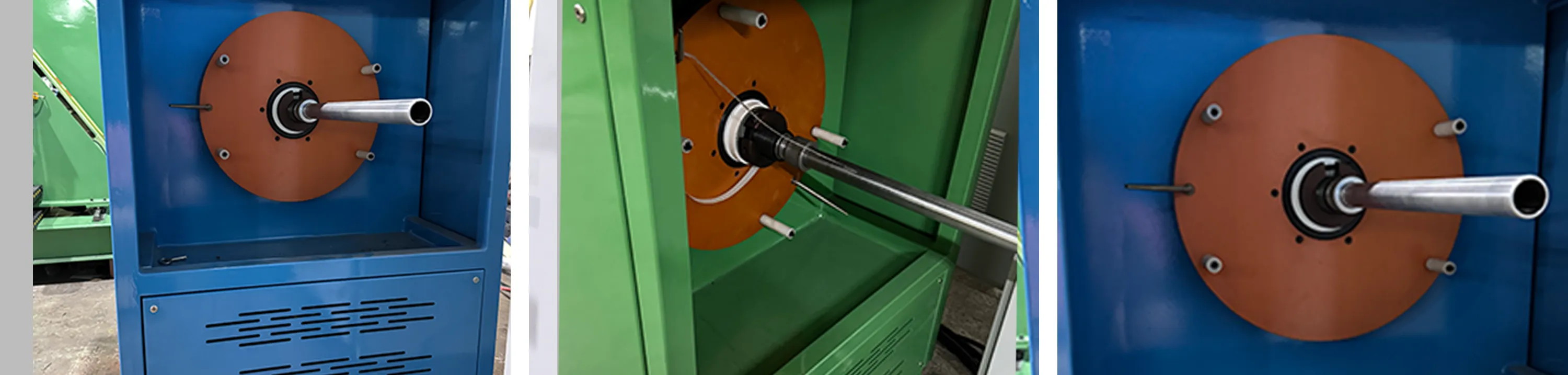
Heat buildup at the taping machine spindle is one of those problems that every cable factory experiences at some point. Unlike issues that are obvious or catastrophic, spindle heat develops gradually. Operators might notice it as a slight warming during long production runs, then as a subtle change in tape adhesion, and finally as a significant operational risk that can affect throughput, quality, and even safety.
From a manufacturing-side perspective, this is not just an equipment issue. It is a symptom of system imbalance — a combination of friction, load, speed, material properties, and operator adjustments. Solving it requires understanding the full context of daily production, rather than just replacing bearings or adding cooling.
This article will dive deep into real-world causes, practical detection methods, and sustainable fixes that small and mid-sized OEM cable factories can apply immediately.
1. Heat: A Symptom, Not the Problem
Before attempting fixes, it’s critical to understand what spindle heat represents.
In most taping machines:
The spindle rotates at high speed to wrap tape evenly around the cable core.
Bearings, rollers, and guides provide support and smooth motion.
Material tension resists spindle rotation, translating torque into tape compression and adhesion.
Heat occurs when the energy required to overcome friction, tension, or misalignment exceeds what the system can dissipate.
In practice, this means spindle temperature is a process signal. It tells us:
Something is increasing resistance in the system.
Friction or misalignment may be building up.
Material handling or tension may be inconsistent.
Treating heat in isolation — by cooling the spindle or replacing a part — often only masks the underlying issue. True improvement requires looking at the entire process and machine interaction.
2. Differentiating Normal and Excessive Heat
Not all heat is problematic. Experienced operators know that some warmth is inevitable, especially during long runs or high-speed operation.
Normal heat patterns:
Gradual temperature rise during ramp-up, stabilizing once production reaches steady state.
Minimal variation during extended runs.
Slight cooling during brief idle periods.
Problematic heat patterns:
Rapid spikes, especially during high-speed runs.
Persistent high temperature that does not subside.
Correlation with tape adhesion defects, tension issues, or vibration.
Recognizing the difference early prevents unnecessary interventions and reduces downtime.
3. Common Causes of Spindle Heat – Manufacturing Reality
3.1 Friction at Bearings and Rollers
Friction is the primary source of spindle heat.
Signs include squealing, vibration, or localized temperature rise.
From experience:
Dry or unevenly lubricated bearings accelerate heat accumulation.
Misaligned rollers create uneven contact, causing hotspots.
Worn components may still rotate, but at high load, friction rises sharply.
Practical takeaway: consistent lubrication and routine alignment checks are more effective than reactive fixes.
3.2 Excessive Tape or Cable Tension
Tape tension is critical. Even minor over-tensioning can increase torque on the spindle exponentially, generating heat.
High-speed operation magnifies this effect.
Material variations in thickness, stiffness, or adhesive layer further amplify resistance.
Operators often overcompensate, thinking “more tension ensures proper wrapping,” inadvertently creating heat issues.
Manufacturing insight: small, deliberate reductions in tension often stabilize temperature more than major equipment changes.
3.3 Misalignment and Runout
Even minor misalignment can create stress points.
A spindle slightly off-axis contacts rollers unevenly.
Eccentricity increases with rotational speed.
Friction and heat are amplified under high-speed runs.
From a practical standpoint, frequent visual checks and minor mechanical adjustments prevent heat buildup before it becomes critical.
3.4 Material Variability
No two tape batches are identical. Adhesive properties, thickness, and core stiffness vary slightly.
Variations increase spindle resistance.
Combined with tension and speed, this can produce hotspots.
Ignoring these subtle differences is common in small factories that run standard setups for every batch.
Key takeaway: adjust speed, tension, or setup for each batch to maintain thermal stability.
3.5 High-Speed Operation Without Gradual Ramp-Up
High speed alone does not generate heat, but it amplifies existing friction and tension issues.
Machines that are quiet at moderate speeds may overheat quickly when pushed to maximum output.
Gradual ramp-up allows bearings and guides to stabilize.
Observing temperature trends during ramp-up provides early warnings before heat reaches dangerous levels.
4. Diagnosing Heat Buildup Without Specialized Tools
Many small factories lack advanced thermal monitoring equipment. Practical diagnostics include:
Listening for squealing, grinding, or vibration patterns.
Observing changes in tape adhesion or wrapping quality.
Monitoring torque or motor current fluctuations.
Comparing temperature trends between similar batches.
These methods allow operators to identify systemic issues early, preventing minor heat from escalating into major downtime.
5. Practical, Sustainable Fixes
From a manufacturing standpoint, the most effective fixes target process consistency, not just components:
Adjust tension to match material and speed: avoid defaulting to maximum tension.
Lubricate bearings consistently: proactive maintenance reduces friction spikes.
Verify alignment and correct runout: small adjustments have outsized effects at high speed.
Account for material differences: fine-tune setup for each batch.
Gradual speed ramp-up: allow system components to stabilize before full-speed operation.
Use heat as a diagnostic signal: track trends and correlate with process variables to identify root causes.
Prioritize consistency over peak speed: steady, repeatable operation reduces heat more than chasing maximum throughput.
6. Long-Term Manufacturing Perspective
Persistent spindle heat is an early warning of broader system stress:
Accelerated wear of bearings and rollers
Increased risk of tape adhesion defects
Potential downtime and maintenance costs
Factories that treat heat as a process signal, rather than just a mechanical failure, gain:
Improved production stability
Lower scrap and rework
Longer equipment life
Better operator confidence and process control
7. Integration with Other Stability Measures
Heat management should not be isolated. It connects directly with:
High-speed noise control – vibration and friction are linked
Extruder screw and strander stability – upstream imbalances propagate to taping
Overall production consistency – stable processes reduce wear, heat, and quality fluctuations
Treating taping heat in isolation is ineffective; viewing it as part of the entire cable manufacturing process yields sustainable results.
8. Key Takeaways
Heat buildup is rarely a single component problem; it signals system imbalance.
Minor adjustments in tension, lubrication, alignment, and speed ramp-up often reduce heat more than replacing components.
Track batch-to-batch material differences and adjust setups accordingly.
Consistency beats peak performance: stable operation reduces heat, improves quality, and extends equipment life.
Early detection via monitoring and observation allows proactive maintenance instead of reactive repair.
Explore the complete cable manufacturing system:
→ Cable Manufacturing Process & Equipment Guide