Русский
 Türkçe
 Tiếng Việt

In cable manufacturing, equipment specifications are often treated as the ultimate source of truth.
Output capacity, speed range, tolerance limits, automation level — these figures dominate technical discussions, purchasing decisions, and supplier comparisons. On paper, higher specifications promise better performance, higher efficiency, and fewer production issues.
Yet once equipment enters real production environments, many factories experience a familiar frustration:
machines that look excellent on specification sheets fail to deliver consistent results on the shop floor.
This gap between expectation and reality is not accidental.
In most cases, the underlying cause is not equipment quality, but production scheduling.
From the manufacturing side, scheduling decisions quietly shape how equipment behaves day after day. They influence stability, consistency, scrap rates, operator behavior, maintenance cycles, and long-term reliability — often far more than the technical specifications themselves.
This article explains why.
Equipment Specifications Describe Capability, Not Conditions
Equipment specifications describe what a machine can do under controlled conditions.
These conditions usually assume:
stable raw materials
experienced and consistent operators
long continuous production runs
minimal interruptions
disciplined maintenance routines
In real cable factories, especially small and mid-scale operations, these assumptions rarely hold.
Production scheduling defines the actual operating conditions:
how long each run lasts
how often the machine is stopped
how frequently parameters are adjusted
how many product types share the same line
how much time operators have for proper setup
As a result, scheduling determines whether equipment operates close to its designed capability or far below it.
Short Production Runs Prevent Machines From Reaching Stability
Every cable manufacturing line has a stabilization period.
During startup, machines experience:
temperature fluctuation
material flow inconsistency
operator adjustments
parameter fine-tuning
Only after this phase does production become stable.
Poor scheduling often forces lines into permanent startup mode:
small batch sizes
frequent order switching
urgent insert orders
unplanned stops
Under these conditions, machines rarely operate long enough to reach steady-state performance.
From a production standpoint, even high-spec equipment cannot compensate for runs that are too short to stabilize.
Frequent Changeovers Multiply Variability
Changeovers are unavoidable in modern cable manufacturing.
What matters is how often they occur.
Each changeover introduces:
mechanical adjustments
material transitions
parameter recalibration
human judgment calls
When scheduling is fragmented, variability compounds.
Operators may follow the same procedures, yet small differences accumulate across multiple restarts. Over time, this leads to:
higher scrap rates
inconsistent dimensions
unpredictable output quality
difficulty identifying root causes
Specifications do not account for this compounding effect. Scheduling does.
Scheduling Shapes Operator Behavior More Than Training Does
Operators do not work in isolation from schedules.
Scheduling decisions influence:
work pace
stress levels
attention to detail
willingness to fine-tune parameters
When production plans are constantly changing, operators are forced to prioritize speed and delivery over optimization.
Even skilled operators struggle under:
overlapping priorities
last-minute order changes
unclear production targets
frequent context switching
In practice, scheduling determines how much human variability enters the system — something no specification can eliminate.
Equipment Sensitivity Increases With Fragmented Scheduling
Higher-spec equipment is often more sensitive.
Advanced systems typically require:
tighter parameter windows
more precise material control
stricter operating discipline
When scheduling lacks structure, these machines can become harder to manage rather than easier.
In many factories, this leads to a paradox:
upgrading equipment without upgrading scheduling discipline increases instability instead of reducing it.
From the manufacturing side, this is a common and often misunderstood outcome.
Scheduling Defines Maintenance Reality
Maintenance plans often assume predictable usage patterns.
In reality, scheduling determines:
stop-start frequency
load variation
thermal cycling
operator handling
Machines subjected to constant interruptions experience different wear patterns than those running continuously.
Over time, poor scheduling contributes to:
accelerated component fatigue
increased calibration drift
more frequent troubleshooting
unplanned downtime
These issues emerge gradually and are rarely linked back to scheduling decisions, even though the connection is direct.
Small and Mid-Scale Factories Are More Exposed
Large factories often mitigate scheduling challenges through:
dedicated production lines
stable order volumes
standardized product families
specialized operator roles
Small and mid-scale factories rarely have these advantages.
They typically face:
shared equipment across multiple products
fluctuating order priorities
limited staffing flexibility
mixed material sources
In such environments, scheduling is not an optimization tool — it is the primary determinant of production performance.
Ignoring this reality while focusing on specifications creates a structural mismatch between equipment capability and factory operation.
Why Buyers Overestimate the Role of Specifications
From a buyer’s perspective, specifications are tangible.
They are easy to compare, document, and justify. Scheduling capability, by contrast, is difficult to quantify and rarely discussed during procurement.
This leads to:
overconfidence in technical superiority
underestimation of operational complexity
unrealistic performance expectations
From the manufacturing side, many performance issues labeled as “equipment problems” are actually scheduling problems in disguise.
Rethinking Equipment Evaluation Through Scheduling
A more realistic evaluation starts with a different question:
How will this equipment be scheduled in actual production?
Key factors include:
typical batch size
expected changeover frequency
operator experience distribution
material variability
delivery pressure
When equipment selection aligns with scheduling reality, stability improves even without higher specifications.
When it does not, no amount of technical capability can compensate.
Production Is a System, Not a Specification Sheet
Cable manufacturing performance emerges from a system:
operators
materials
maintenance
scheduling
Among these, scheduling acts as the coordinator.
It determines how all other elements interact.
Factories that treat scheduling as a strategic function consistently achieve:
better consistency
lower scrap
higher delivery reliability
longer equipment life
Those that focus exclusively on specifications often struggle to convert technical capability into real production results.
Final Perspective From the Manufacturing Side
From the shop floor, the conclusion is clear:
Equipment specifications define what is possible.
Production scheduling defines what actually happens.
In cable manufacturing, what you run, when you run it, and how often you interrupt the process has a greater impact on results than any number printed on a datasheet.
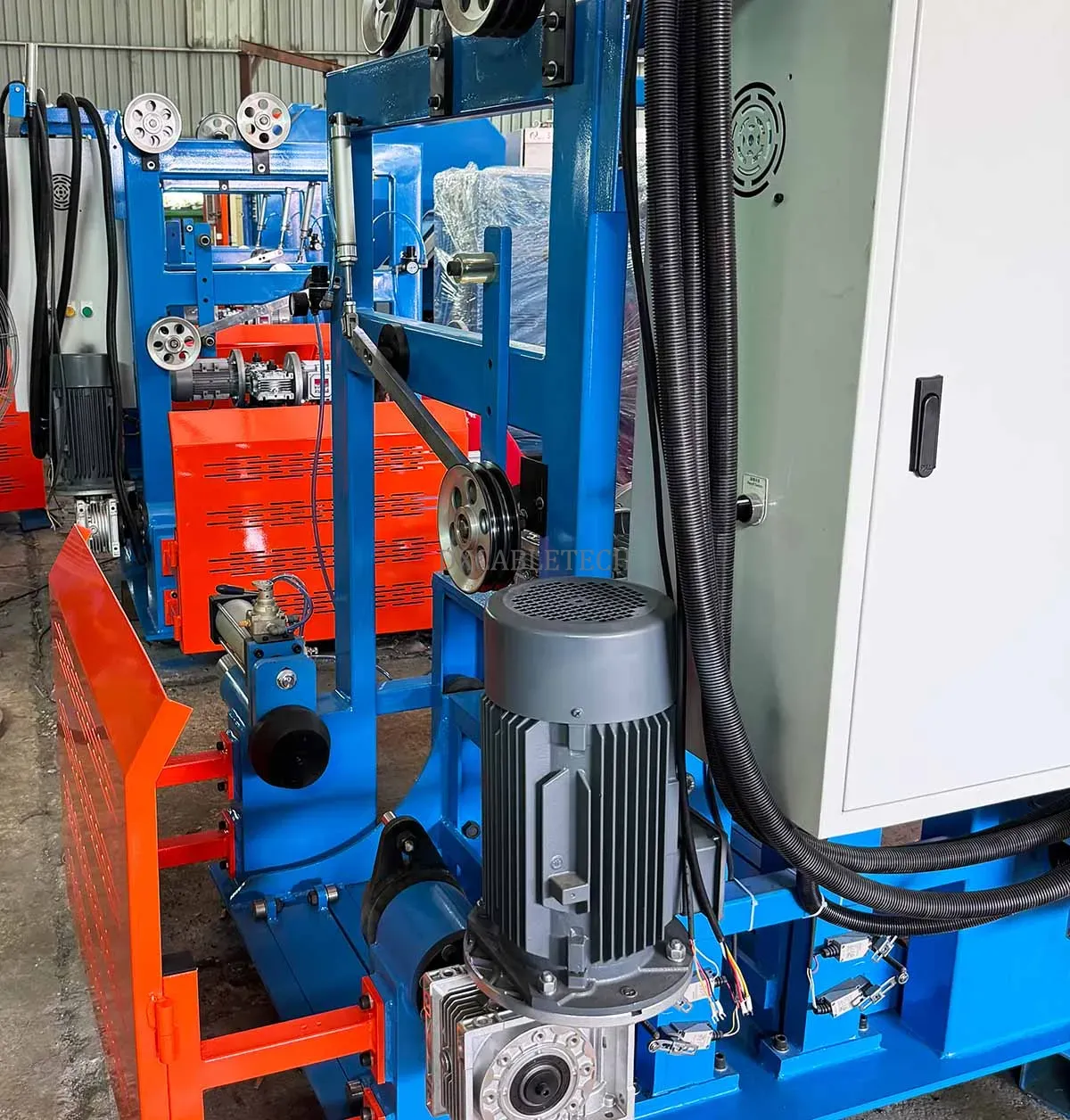
Explore the complete cable manufacturing system:
→ Cable Manufacturing Process & Equipment Guide