Русский
 Türkçe
 Tiếng Việt
The announcement of the Amazon Fastnet subsea cable project marks another important milestone in the ongoing transformation of global digital infrastructure. As international data traffic continues to expand at an accelerating pace, hyperscale technology companies are no longer treating connectivity as a secondary concern. Instead, physical network infrastructure has become a strategic asset that directly impacts performance, resilience, and long-term competitiveness.
Fastnet is a high-capacity transatlantic subsea fiber optic cable system designed to connect the United States and Ireland. While subsea cables have existed for decades, projects like Fastnet reflect a new generation of privately owned, purpose-built systems driven by the specific operational needs of cloud service providers.
This project is not simply about adding more bandwidth. It illustrates how global connectivity, cloud architecture, and cable manufacturing are becoming increasingly intertwined.
Subsea Cables as the Backbone of the Global Internet
Despite advances in satellite communications and wireless technologies, more than ninety-five percent of intercontinental data traffic is still transmitted through subsea fiber optic cables. These cables form the invisible backbone of the global internet, enabling everything from financial transactions and enterprise cloud services to video streaming and real-time communication.
Over the last ten years, global data consumption has grown exponentially. Key drivers include the widespread adoption of cloud computing, the rapid development of artificial intelligence applications, the growth of global content platforms, and the digital transformation of traditional industries.
As data volumes increase, the limitations of older subsea cable systems become more apparent. Many legacy systems were designed for traffic patterns and capacity requirements that no longer reflect current or future demand. This has pushed major technology companies to rethink how global networks should be built and controlled.
Why Amazon Is Investing in Its Own Subsea Cable
Amazon’s decision to develop the Fastnet subsea cable aligns with a broader industry trend in which hyperscale companies take direct ownership of critical infrastructure. Rather than relying solely on consortium-based or carrier-owned cable systems, companies like Amazon increasingly prefer dedicated assets that can be optimized for their own platforms.
One of the primary motivations is long-term capacity security. Shared subsea systems require capacity to be negotiated and allocated among multiple stakeholders. For a global cloud provider, this model introduces uncertainty as data demand continues to rise year after year. A private cable provides guaranteed access to bandwidth over the entire lifecycle of the system.
Latency is another critical factor. By controlling the route design, landing points, and network integration, Amazon can reduce transmission delays between its major data center regions. Even small reductions in latency can have significant impact on cloud performance, real-time applications, and user experience.
Network resilience also plays a major role. Dedicated subsea cables allow cloud providers to design redundancy and failover strategies that align precisely with their internal network architecture. This reduces dependency on third-party infrastructure and minimizes the risk of congestion or service disruption.
Fastnet strengthens Amazon’s global backbone by directly linking North America and Europe, two of the company’s most important operational regions.
Technical Complexity Behind Modern Subsea Cable Systems
Subsea fiber optic cables are among the most technically demanding products in the cable industry. Unlike terrestrial cables, subsea systems must operate continuously for decades without physical maintenance, often at depths of several thousand meters.
One of the core challenges is maintaining signal integrity over extremely long distances. Transatlantic cables span thousands of kilometers, requiring precise control of fiber attenuation, dispersion, and consistency. Even small variations in fiber quality can accumulate over distance and affect overall system performance.
Mechanical strength is another critical requirement. During installation, subsea cables are subjected to significant tension, bending, and torsion. After deployment, they must withstand constant water pressure, seabed movement, and potential external interference such as fishing activity or anchoring.
Environmental resistance further complicates design and manufacturing. Subsea cables are exposed to saltwater, temperature gradients, and biological activity for their entire operational life. Protective layers, armoring structures, and material selection must be optimized to ensure long-term durability.
These technical challenges place exceptionally high demands on manufacturing precision, process stability, and quality control.
Manufacturing Implications for the Cable Industry
The Fastnet project highlights a broader shift in subsea cable manufacturing. Earlier generations of cables relied more heavily on standardized designs and established production routines. Today, large-scale projects increasingly require customized engineering solutions tailored to specific routes, depths, and performance targets.
Manufacturers must be capable of producing ultra-long cable lengths with consistent quality from start to finish. This requires stable extrusion processes, precise conductor and fiber alignment, and continuous monitoring throughout production.
Testing and inspection systems also play a critical role. Advanced electrical, optical, and mechanical testing is essential to detect potential defects before deployment, as post-installation repairs are extremely costly and technically complex.
As project specifications become more demanding, the importance of advanced cable production equipment and process optimization continues to grow.
Private Subsea Cables and Industry Structure Changes
Fastnet is part of a larger pattern in the global subsea cable market. In recent years, multiple hyperscale companies have announced private or semi-private subsea cable systems designed to support their expanding cloud ecosystems.
This trend is reshaping the structure of the subsea cable industry. Traditional telecom operators are no longer the sole drivers of large-scale projects. Technology companies now play a central role in defining technical requirements, investment models, and deployment strategies.
For cable manufacturers and equipment suppliers, this shift introduces both opportunities and challenges. Demand for high-performance subsea cables is expected to remain strong, but expectations around quality, delivery reliability, and technical support are higher than ever.
Manufacturers that can meet these requirements will be well positioned as global data infrastructure continues to expand.
Strategic Importance of Transatlantic Connectivity
The transatlantic route remains one of the most critical corridors in the global internet. It supports massive volumes of financial data, enterprise traffic, and cloud-based services between North America and Europe.
As digital economies on both sides of the Atlantic continue to grow, the need for additional capacity and redundancy becomes increasingly important. Projects like Fastnet enhance not only bandwidth availability but also overall network resilience.
By investing directly in transatlantic infrastructure, Amazon reinforces its ability to deliver reliable services across regions while maintaining control over performance and scalability.
Long-Term Outlook for Subsea Cable Development
Looking ahead, global demand for subsea cable infrastructure is expected to continue growing. Artificial intelligence, data-intensive applications, and cross-border digital services will place sustained pressure on existing networks.
Subsea cables are no longer passive utilities. They are strategic assets that influence how digital services are delivered and scaled worldwide.
For the cable industry, this means that future competitiveness will depend on the ability to deliver high-specification products with exceptional reliability. Precision manufacturing, advanced materials, and stable production processes will remain central to success.
The Amazon Fastnet subsea cable project is a clear signal that investment in global connectivity infrastructure is far from slowing down. Instead, it is entering a new phase defined by higher technical standards, greater customization, and closer integration between network design and cable manufacturing.
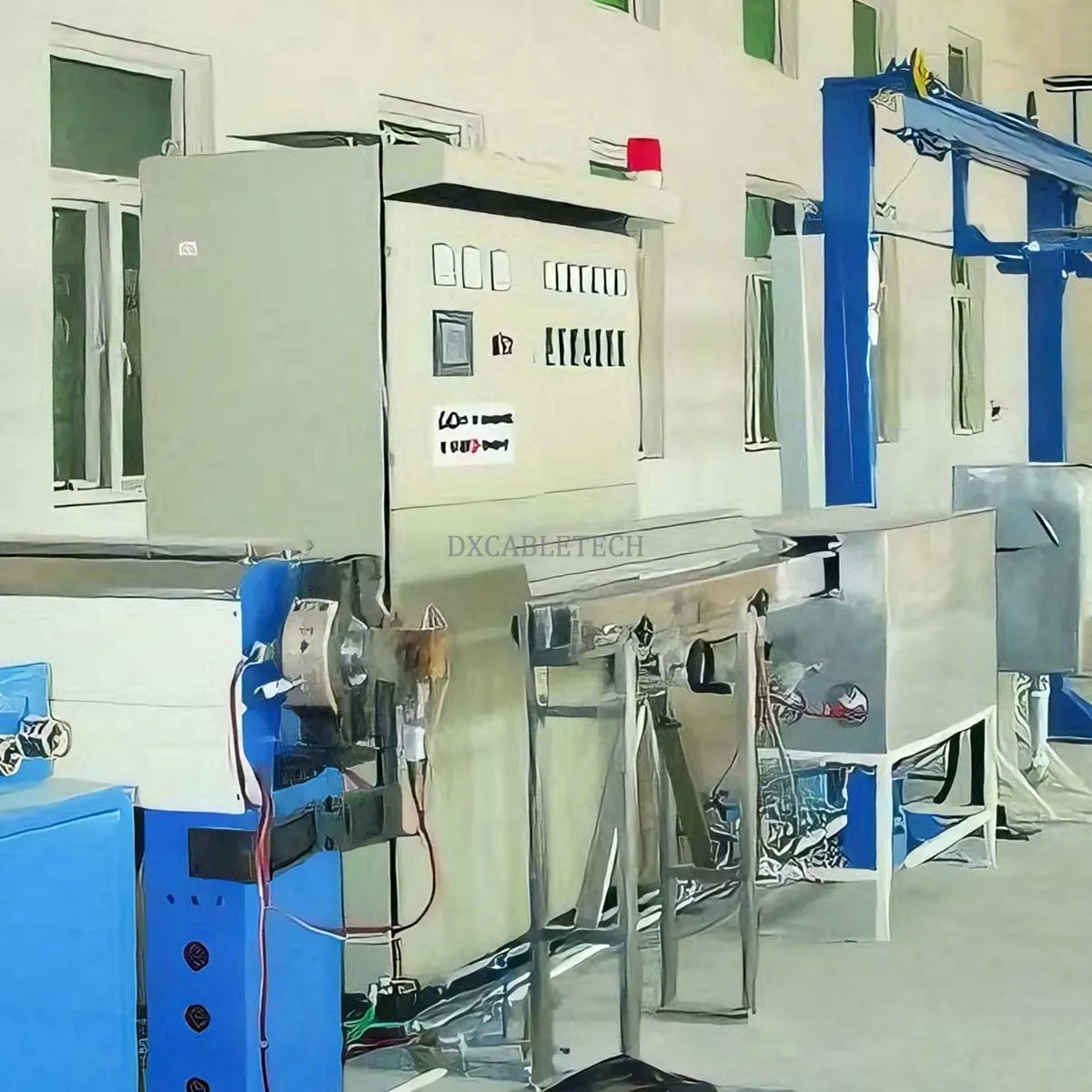
Explore the complete cable manufacturing system:
→ Cable Manufacturing Process & Equipment Guide