Русский
 Türkçe
 Tiếng Việt

Expanding cable manufacturing capacity isn’t just about adding machines or increasing shifts. It’s a strategic, multi-layered decision that affects production quality, material sourcing, compliance, and financial sustainability. Getting it wrong can lead to idle lines, oversupply, material waste, or certification failures.
Here’s a deep dive into the five critical questions that manufacturers ask before scaling operations, with practical insights from real-world cable factories.
1. Is There Sustainable Market Demand?
Expanding capacity without a clear understanding of demand is a fast track to overproduction. Many manufacturers make the mistake of relying solely on broad market forecasts, which can mask regional or product-specific fluctuations.
Key points to consider:
Segment Analysis: Different cable types—power cables, LSZH, EV charging, and specialty telecom cables—have very different growth trajectories. For example, the EV market is booming, but EV-specific cable demand can be volatile depending on infrastructure rollout schedules.
Client Pipeline Verification: Instead of relying on general trends, analyze confirmed contracts, ongoing projects, and expected new tenders. Ask whether the demand is one-time bulk orders or recurring requirements.
Competitor Activity: Assess whether competitors are expanding aggressively. An influx of new production lines in the same market can quickly lead to oversupply and price pressure.
Real-world insight: A Southeast Asian manufacturer increased line capacity anticipating a regional data center boom, only to find projects delayed by regulatory approval. The result was idle production lines for six months, tying up capital and labor.
2. Can Existing Machinery Handle Increased Load, or Is New Technology Needed?
Capacity isn’t just about running machines longer. It’s about efficiency, precision, and maintaining quality under higher throughput.
Considerations for machinery:
Line Speed and Tension Control: Faster extrusion can compromise insulation thickness consistency. For instance, XLPE or LSZH cables with tight IEC or UL tolerances require precise pay-off and take-up control to avoid stretching or deformation.
Equipment Life Cycle: Older machinery may not handle continuous high-speed operation. High-load expansion without upgrading can lead to breakdowns or reduced cable quality.
Automation and Monitoring: Modern lines equipped with real-time thickness measurement and tension monitoring reduce scrap rates and ensure compliance under increased throughput.
Example: A European manufacturer added a 30% higher throughput target to a PVC line. Without upgrading the capstan and puller system, conductor tension variations increased scrap by 12%, eroding expected profit margins.\
3. Are Materials and Supply Chains Ready?
Even the fastest and most advanced lines fail if material supply is unstable. As production scales, so does the importance of consistent raw materials.
Critical factors:
Supplier Capacity and Consistency: PVC, XLPE, and LSZH compounds must meet strict tolerances batch-to-batch. Any variation can cause fire test failures (IEC 60332 / UL 1581) or mechanical defects.
Price Volatility: Large volume requirements can expose manufacturers to price spikes or shipping delays, particularly for halogen-free compounds or specialized insulation materials.
Alternative Sourcing: Planning for multiple certified suppliers reduces risk but requires extra validation and testing to ensure materials behave consistently on production lines.
Insight: A manufacturer aiming to produce LSZH cables for European projects had to delay deliveries because their sole supplier could not provide sufficient batches meeting CPR B2ca fire class standards.
4. How Will Quality and Compliance Be Maintained?
Scaling production increases the risk of quality lapses, which can invalidate certifications and hurt reputation.
Considerations:
Quality Assurance Scaling: Additional QA engineers, lab technicians, and testing equipment may be needed. Simply increasing output without proportional quality control leads to rejects or non-compliance.
Certification Requirements: IEC and UL certifications require adherence to specific processes. For UL, even minor deviations from approved insulation thickness or conductor sizes can void approvals.
Training for Operators: Higher line speeds, different materials, or new cable constructions often require retraining operators to maintain precision.
Real example: A factory scaling to meet North American UL 44 demand found that minor conductor diameter variations caused three batches to fail insulation resistance tests, resulting in costly rework and delayed shipments.
5. Is the Investment Financially Justifiable?
Even if demand, machinery, and materials align, financial prudence is critical. Expansion is an investment that must deliver measurable returns.
Metrics to evaluate:
Cost per Meter at Full Capacity: Higher throughput may reduce unit costs, but consider material waste, electricity, labor, and maintenance.
Payback Period: Assess whether projected orders can cover the investment in machinery upgrades and facility modifications within a reasonable timeframe.
Flexibility for Future Upgrades: Modular expansion approaches allow incremental scaling, reducing risk if market demand shifts unexpectedly.
Tip: Some manufacturers adopt a phase-based expansion, starting with a single line upgrade, testing throughput, material stability, and compliance performance before scaling additional lines.
Bonus Insight: Planning for the Unexpected
Even with careful planning, global supply chain disruptions, regulatory changes, or sudden market shifts can impact expansion plans. Successful manufacturers:
Maintain buffer inventories of critical materials.
Invest in flexible machinery capable of producing multiple cable types.
Monitor regional and global standards trends, such as evolving CPR classifications or UL test protocols, to avoid obsolescence.
Final Thoughts
Expanding cable manufacturing capacity is not a simple operational decision—it’s a strategic exercise combining market analysis, engineering precision, material management, and financial discipline.
By asking the right questions—about demand, machinery, materials, quality, and financial feasibility—manufacturers can expand safely, sustainably, and profitably, avoiding wasted investment, idle lines, and compliance issues.
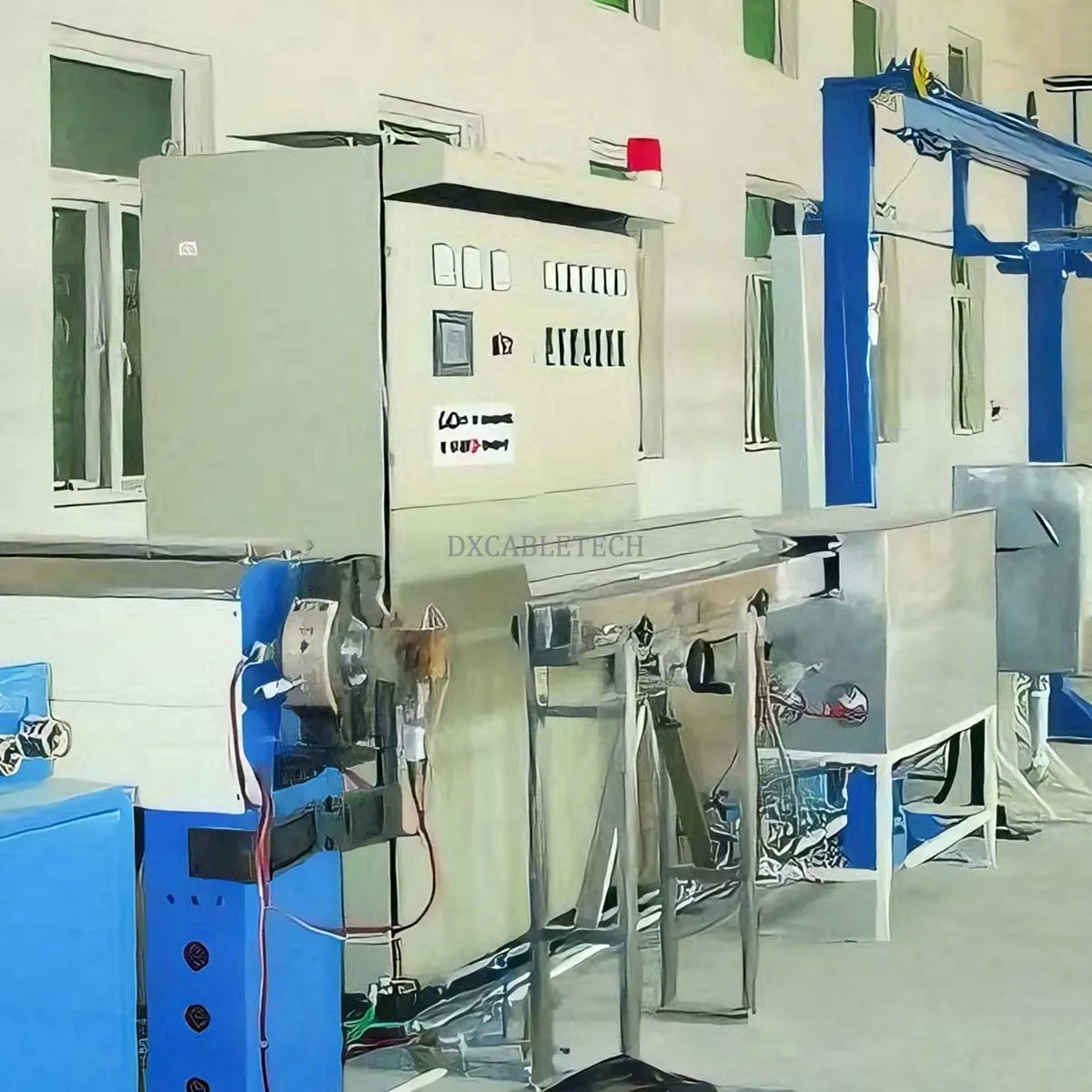
Explore the complete cable manufacturing system:
→ Cable Manufacturing Process & Equipment Guide