Русский
 Türkçe
 Tiếng Việt
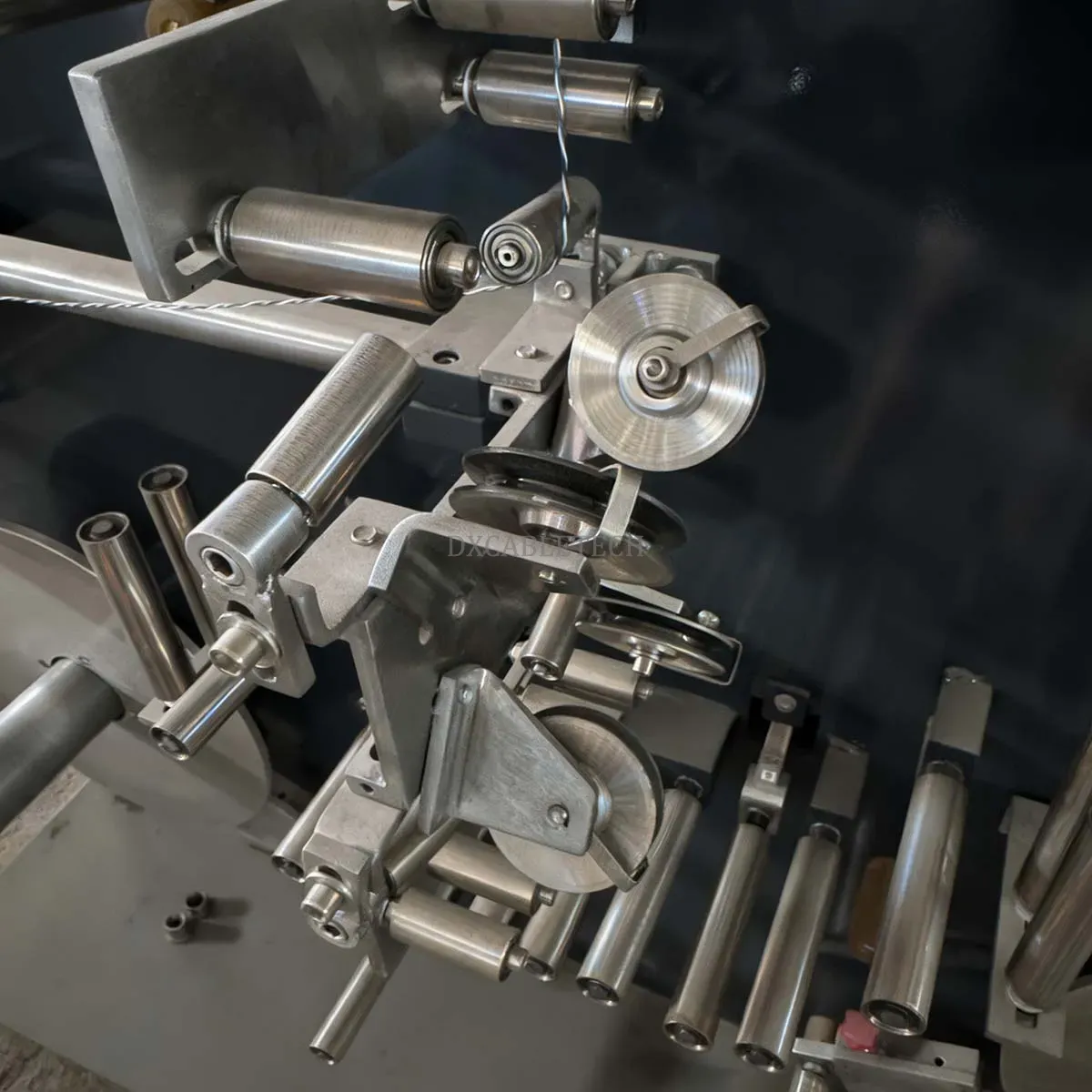
Operating a cable wrapping machine is more than pressing “start.” Modern machines, especially automated or PLC-controlled units like those from DOSING, require skilled operators to ensure efficiency, safety, and product quality. Proper training is crucial to reduce downtime, prevent material waste, and maintain high production standards.
1. Basic Machine Operation
Operators must first understand the core functions of a cable wrapping machine:
How to start, stop, and pause the machine safely.
Understanding control panels and indicators (speed, tension, layer count).
Loading and unloading cable spools correctly.
Adjusting the wrapping tension and layer settings depending on cable type.
Hands-on training should include running trial batches to practice these skills without risking production losses.
2. Safety Training
Safety is critical when working with high-speed rotating machinery:
Proper handling of moving parts and avoiding pinch points.
Emergency stop procedures and safety lockouts.
Using personal protective equipment (PPE) such as gloves and safety glasses.
Awareness of cable ejection or snapping risks during high-speed operation.
3. Routine Maintenance & Cleaning
Operators should learn daily and weekly maintenance routines to prolong machine life:
Checking rollers, guides, and wrapping heads for wear.
Cleaning the machine from dust, debris, or PVC residues.
Lubricating moving parts as specified in the manual.
Recognizing early warning signs of mechanical issues.
4. Quality Control & Inspection
A key operator responsibility is ensuring wrapped cables meet factory quality standards:
Inspecting tension consistency, layer alignment, and spool uniformity.
Detecting defects such as uneven wrapping, gaps, or overlaps.
Documenting production parameters and issues for traceability.
5. Troubleshooting and Problem Solving
Operators must be able to respond quickly to common machine issues:
Wrapping head jams or misalignment.
Tension inconsistencies.
Faulty sensors or PLC errors.
Understanding error codes and performing minor corrections without halting the entire production line.
6. Advanced Automation Knowledge
For factories using PLC-integrated cable wrapping machines, operators may need basic training in:
Understanding automation sequences.
Adjusting programmable settings for different cable types.
Communicating with maintenance or engineers for advanced system tweaks.
7. Continuous Improvement & Lean Practices
Top-performing operators contribute to production efficiency by:
Suggesting minor workflow improvements.
Reducing material waste through optimal settings.
Recording metrics to improve machine uptime and cable quality.
Conclusion:
Properly trained operators are the backbone of a high-efficiency cable wrapping machine line. Training should combine hands-on operation, safety, maintenance, quality control, and basic automation knowledge. Factories that invest in operator training typically see fewer stoppages, higher production speed, and better cable consistency, maximizing ROI from their machines.