Русский
 Türkçe
 Tiếng Việt

Introduction – Why Efficiency Matters
In modern cable production, even small inefficiencies can cost factories thousands of dollars every month. Many production lines operate at only 70–80% of their potential capacity—not because of workers, but because the cable making machines themselves aren’t optimized. Delays, inconsistent insulation, and frequent rework all contribute to lost productivity.
For factory managers and engineers, understanding how to boost cable making machine efficiency is essential. In this article, we explore five actionable strategies that can transform your operations, improve product quality, and maximize output—all while keeping labor and energy costs under control.
1. Upgrade to PLC-Controlled Systems
Older cable making machines often rely on manual adjustments and basic controllers, which can limit speed, precision, and overall output. Upgrading to PLC-controlled cable making machines allows operators to:
Automate complex adjustments in real-time
Monitor production parameters continuously
Reduce human errors and downtime
Real-world impact: Factories that implemented PLC-controlled cantilever machines from DOSING reported a 40% increase in production efficiency and more consistent cable quality. By modernizing control systems, managers can achieve higher throughput without increasing labor costs.
Tip: Even partial PLC integration for extrusion or stranding units can yield measurable efficiency gains.
2. Optimize Extruder Settings
The extruder is the heart of any cable production line. Slight misalignments in temperature, screw design, or feed speed can create waste and slow production. Optimizing these settings ensures:
Uniform insulation thickness
Minimal material waste
Stable production speeds
Practical insight: Adjusting extrusion temperature by just a few degrees for PVC or foamed insulation can improve output by 10–15% while reducing rejects. For physical or chemical foaming extruders, precise control prevents air pockets that compromise cable performance.
Tip: Keep detailed logs of extrusion settings for each cable type to streamline future production runs.
3. Streamline Stranding and Twisting Operations
Stranding machines determine cable flexibility, strength, and electrical performance. Choosing the wrong machine type or operating incorrectly can create frequent defects. Key options include:
Single Twist Machines: Best for small to medium conductors.
Double Twist Machines: Provide mechanical stability for medium-voltage cables.
Pair Twist Machines with Back Twist: Ideal for communication cables, reducing crosstalk and signal loss.
Case study: A factory producing CAT6 cables switched from a generic twist machine to a pair twist machine with back twist and reduced rework by 20%, significantly cutting downtime.
Tip: Match the stranding machine to cable specifications. Don’t overcomplicate the twist ratio—precision matters more than speed.
4. Automate Coiling, Taping, and Cutting
Even if extrusion and stranding are optimized, manual coiling, taping, and cutting can bottleneck production. Modern automatic coiling and taping machines offer:
Consistent tape application
Precise, compact coiling for storage and shipment
Reduced labor requirements
Computerized cutting machines also ensure cable lengths are exact, reducing scrap by 10–20%.
Tip: Schedule routine calibration for pay off, coiling, and cutting systems. Small misalignments can snowball into large inefficiencies.
5. Preventive Maintenance & Smart Monitoring
Regular maintenance keeps machines running at peak performance. Key steps include:
Lubricate moving parts and bearings
Monitor extrusion temperatures and pressures
Inspect twist and stranding components
Calibrate cutting systems regularly
Advanced tip: Use AI-enabled monitoring or sensor-based predictive maintenance. This allows operators to anticipate issues before they cause downtime, improving overall line efficiency and extending machine life.
Fact: Factories adopting predictive maintenance on cable making machines reported up to 25% fewer unplanned stops, increasing annual throughput significantly.
Conclusion – Take Action Today
Optimizing cable making machine efficiency is no longer optional for modern factories. From upgrading PLC systems to optimizing extruders, streamlining stranding operations, automating coiling and cutting, and implementing preventive maintenance, every step contributes to higher productivity, better product quality, and lower operating costs.
Even implementing one or two of these strategies can make a noticeable difference in your production line. For comprehensive upgrades, PLC-controlled and automated solutions from companies like DOSING provide measurable efficiency gains, allowing factories to stay competitive in a fast-moving industry.
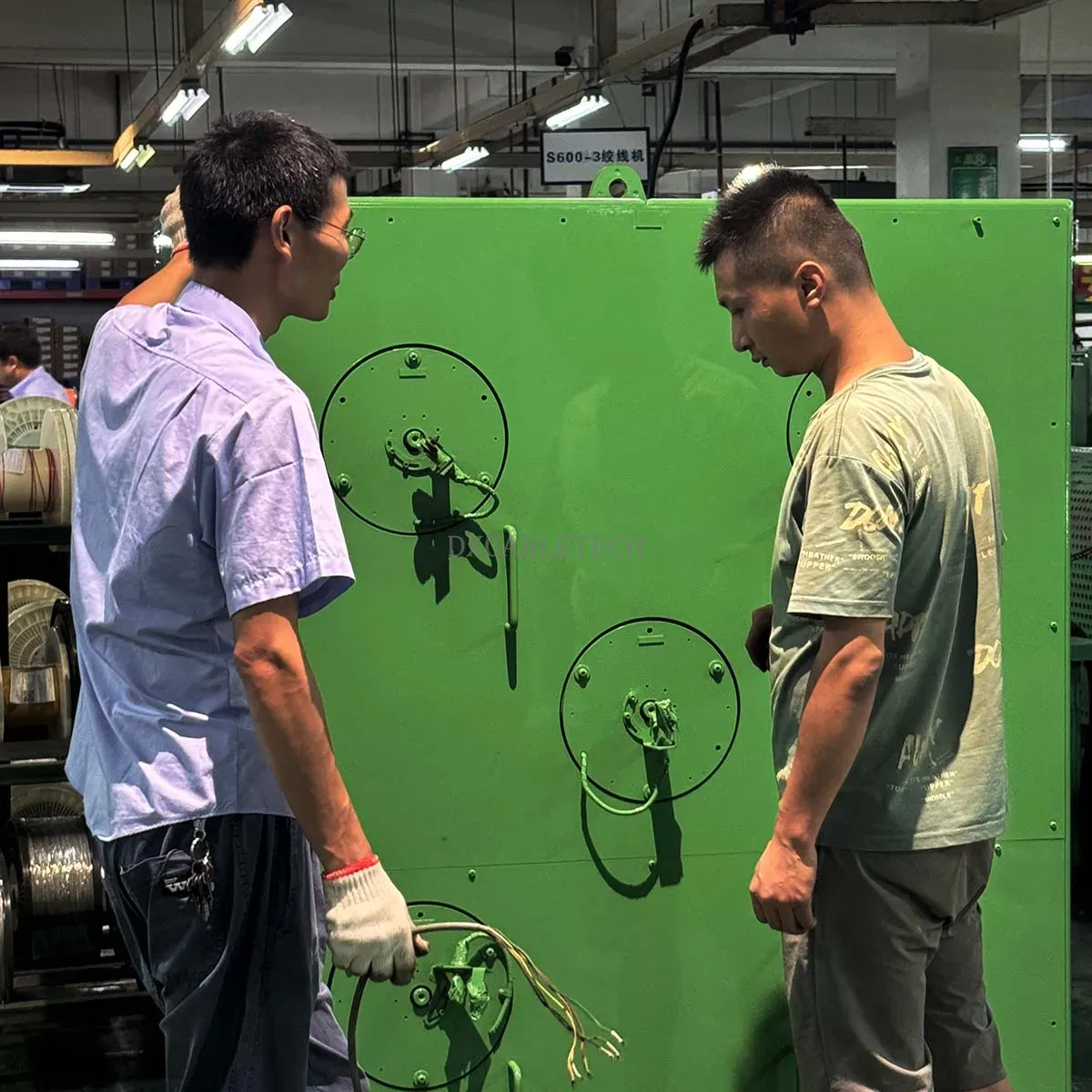
Explore the complete cable manufacturing system:
→ Cable Manufacturing Process & Equipment Guide